What Chapter 8 is, and isn't
Chapter 8 is guidance. On its own it has no statutory force in Great Britain, and it's usually made binding through contracts. For National Highways work, for example, the Specification for Highway Works requires contractor vehicles to comply with Section O5 of Chapter 8 Part 2. Separate law also applies: the Road Vehicles Lighting Regulations 1989 control which reflective colours may face forwards and backwards. Larger goods vehicles and trailers have their own ECE 104 / UN R150 contour-marking rules.
The usual rear chevron layout
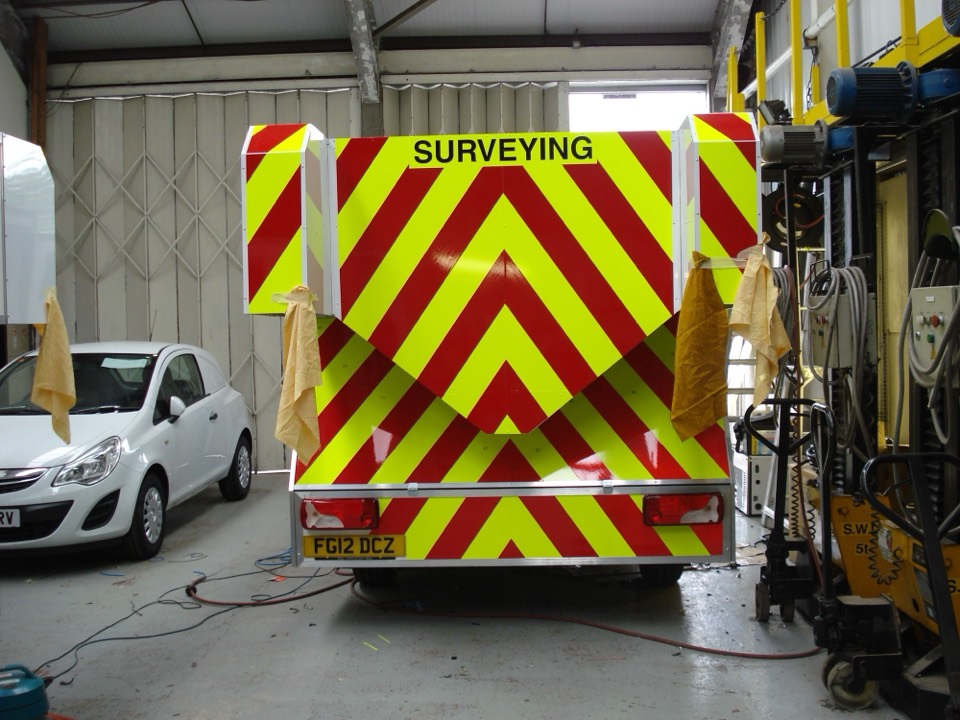
For vehicles stopping on high-speed roads (50 mph and above), the guidance describes chevrons of alternating fluorescent orange-red retroreflective and fluorescent yellow non-retroreflective strips. Each strip is at least 150 mm wide, set at 45–60° and pointing upwards, covering as much of the rear as possible without hiding lights, windows or the number plate. If the vehicle body isn't yellow or white, a fluorescent yellow retroreflective side strip at least 50 mm wide is added. Your client's specification may ask for more, such as a particular material class.
What we need to quote
- Vehicle make, model, year and body type
- Gross vehicle weight, plus date of first use (or manufacture, for trailers)
- Rear door layout, with photos and measurements of the rear
- Where it works: motorway, high-speed roads, or roads of 40 mph and under
- Your operator's or client's livery and conspicuity specification
- Any rear-mounted equipment, and existing markings to remove
We don't claim "Chapter 8 certification". No such scheme exists for sign makers. National Highways expects to publish a consolidated Chapter 8 in November 2026, and we'll review this page when it does.